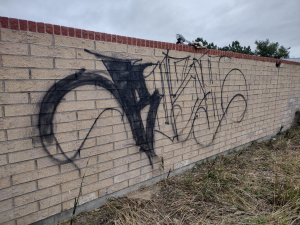

When graffiti shows up on your building, you have two basic options: remove it or paint over it. Both make the tag disappear today, but they lead to very different outcomes over time. The graffiti removal vs. painting over graffiti decision really comes down to your surface, your budget, and how that wall will look a year from now. In most cases, professional graffiti removal is the better long-term choice, though painting over has its place. The right answer depends as much on what your wall is made of as on the graffiti itself. Here is how the two compare.
The Two Ways to Handle Graffiti
Both approaches make the graffiti disappear, but they get there very differently:
- Removal lifts, dissolves, or blasts the paint off and restores the original surface underneath, using chemical removers, pressure washing, or soda and media blasting
- Painting over the graffiti, what we call a paint-over, covers it with a fresh layer of paint rather than removing it
That difference, restoring the surface versus covering it, is the heart of the comparison.
Graffiti Removal: The Pros and Cons
Removal returns the wall to how it looked before the tag appeared.
The advantages:
- Preserves the original surface, with no color mismatch or patchwork
- Works on bare brick, stone, concrete, and stucco that should never be painted
- Avoids the paint buildup that comes with repeated cover-ups
- Looks cleaner and more professional when it is done correctly
The trade-offs:
- Requires the right method and equipment for each surface
- Heavily weathered or aged surfaces may show faint shadowing
- A poor DIY attempt can etch or damage the wall
Done by a pro, removal is close to invisible. The wall simply looks clean again.
Painting Over Graffiti: The Pros and Cons
Painting over graffiti is the faster, more familiar option, and sometimes the right one.
The advantages:
- Quick and simple on surfaces that are already painted
- Can hide stubborn ghosting that will not fully lift
- Useful for very large areas that were due to be painted over anyway
The drawbacks:
- Color rarely matches exactly, which leaves a visible patch
- Works only on already-painted surfaces, never on bare masonry
- Builds up layer after layer with each new tag
- Can trap moisture in masonry and cause damage over time
That last point matters more than it sounds. The National Park Service warns that paint and coatings applied to masonry can trap moisture inside the wall, which leads to deterioration such as spalling, where the face of the brick flakes away. Painting bare brick or stone to hide a tag can quietly create a much bigger repair down the road. Over the years, mismatched patches and stacked layers also add up, both in appearance and in maintenance cost, until the wall has to be stripped and redone anyway.
Can You Remove Graffiti Without Painting Over It?
Yes. One of the biggest advantages of professional removal is that you can remove graffiti without painting over it at all. Rather than covering the tag, the right combination of pressure washing, chemical removers, and gentle blasting lifts the paint out of the surface and leaves the original material intact.
This matters most on:
- Unpainted brick, stone, and concrete, where paint would look out of place and trap moisture
- Decorative or historic facades, where the original surface is part of the building’s character
- Textured stucco, where a paint patch stands out as much as the graffiti did
Removing graffiti without painting over it keeps your building looking original, avoids the endless paint-over cycle, and protects the surface for the long run. It also tends to be the more cost-effective approach over the life of the building, since you are not paying to paint over the same wall every time it gets tagged.
When Painting Over Graffiti Makes Sense
Painting over is not always the wrong call. It can be the practical choice when:
- The surface is already painted and you have an exact color match
- Ghosting or staining will not fully lift even after removal
- The area is large and a fresh, uniform coat is the goal
- The wall is already due for a paint-over as part of regular maintenance
In those cases, a clean paint-over can be quick and effective. The key is choosing it on purpose, rather than defaulting to it because it feels easier.
Which Option Is Better for Your Property?
For most commercial properties, removal wins on appearance and long-term value, while painting over wins on short-term speed for walls that are already painted. Here is a quick comparison:
| Factor | Graffiti Removal | Painting Over |
| Surface preservation | Keeps the original surface | Covers it with new paint |
| Best for | Bare brick, stone, concrete, stucco | Already-painted walls |
| Appearance | Restores the original look | Risk of a visible color mismatch |
| Long-term buildup | None | Layers add up over time |
| Masonry health | Protects the surface | Can trap moisture |
For bare masonry, removal is almost always the better answer. For surfaces that are already painted and easy to match, painting over can be a reasonable shortcut.
Professional Graffiti Removal in Denver
The graffiti removal vs. painting over graffiti question usually comes down to one thing: do you want to restore the wall or just cover the problem? On most surfaces, removal protects your property and looks better for far longer.
Lightning Mobile Services has removed graffiti for Denver-area property managers, businesses, and municipalities for more than 40 years, often without any painting over at all. We match the method to your surface, protect what is around it, and document the work when we finish. Reach out for a free estimate, or explore our full range of exterior services to keep your property looking its best.