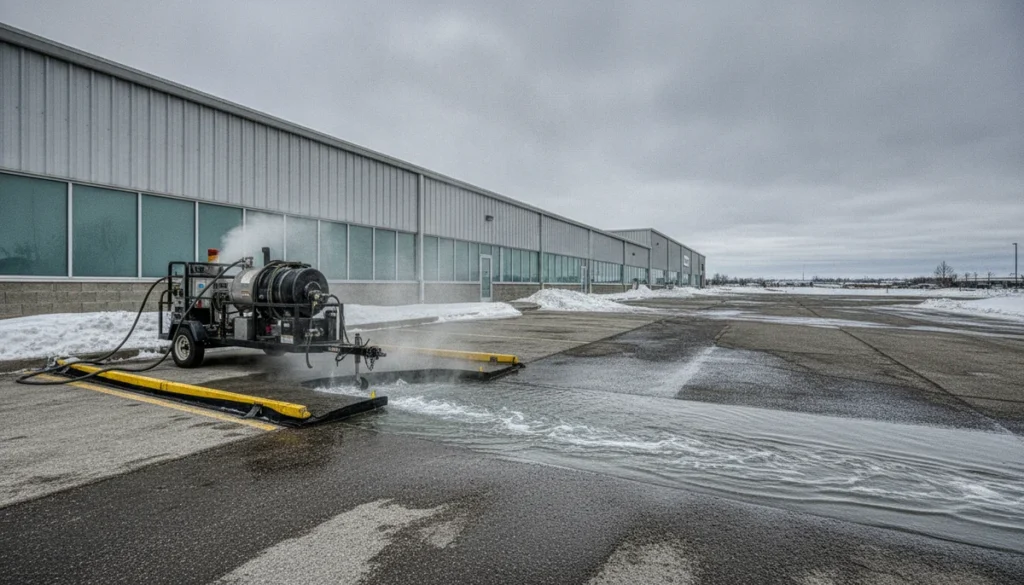
Yes, you can pressure wash a commercial property in winter, as long as the work is done by a company with the right equipment and know-how. Many property managers assume pressure washing shuts down once the temperature drops, and for operators with basic cold-water setups, it largely does. But with hot water equipment and proper cold weather technique, a lot of commercial washing can be done safely and effectively through a Colorado winter. The real questions are not whether it is possible, but which jobs make sense in the cold, which are better left for spring, and which genuinely cannot wait.
What Changes When Temperatures Drop
Cold weather changes the job in a few important ways. Water behaves differently near and below freezing, cleaning chemistry slows down, and the margin for error on safety gets thinner. A crew that pressure washes in winter the same way they would in July will create ice hazards and risk damaging equipment. Done right, winter washing accounts for all of that: it uses heated water, controls where the runoff goes, works within the right weather windows, and treats surrounding surfaces so the cleaned area does not turn into a skating rink. The capability gap between operators is why winter is exactly when it pays to work with a company equipped for the conditions.
Freeze Risk: Surfaces, Runoff, and Walkways
The single biggest concern with winter pressure washing is not the washing, it is what happens to the water afterward. In freezing temperatures, runoff that pools on a walkway, entrance, or parking surface can turn to ice, creating a slip-and-fall hazard exactly where people walk. Surfaces also dry more slowly in the cold, which widens the window for ice to form.
A professional crew manages this deliberately: directing runoff away from foot traffic, adjusting spray and technique to avoid pooling, pretreating or deicing where needed, and treating surrounding areas with salt or sand so the finished job is clean and safe, not clean and slick. There is also equipment risk. Water left in hoses, pumps, and lines can freeze and crack components, which is why cold weather washing requires gear and handling built for it.
Hot Water Washing and Why Equipment Matters
Hot water is what makes winter pressure washing viable. It matters for two reasons. First, heated water cuts through grease, oil, grime, and salt film far better than cold water, so the job gets done faster and more completely. Second, and critically for winter, hot water resists freezing on the surface and in the equipment, which cold water units simply cannot do once the temperature drops.
This is the difference between a company that can work in winter and one that cannot. Lightning Mobile runs a wide range of commercial-grade equipment, including hot water systems, and has provided commercial property services around Denver for roughly 40 years. That equipment range and experience is exactly why we can take on winter jobs that smaller operators with basic cold-water machines have to turn down. You can see the full scope of our commercial pressure washing services for more.
What Should Wait Until Spring
Winter capability does not mean everything should be done in winter. Some jobs are genuinely better scheduled for warmer months, and a straight-shooting company will tell you so rather than take the work:
- Large aesthetic building washes. Full building exteriors and big surface washes done purely for appearance usually make more sense in spring, when conditions are easier and the result lasts.
- Jobs where runoff cannot be controlled safely. If a surface and its surroundings cannot be managed to prevent dangerous ice, the job is better deferred.
- Work during active storms or deep cold. Washing in precipitation or extreme cold is neither safe nor effective, and it is worth waiting for a better window.
The goal is to do the work that delivers real value in winter and hold the rest for when it makes sense, which is better for your budget and your results.
Winter Jobs That Genuinely Cannot Wait
Some cleaning problems get worse, more expensive, or more hazardous the longer they sit, and those are worth handling in winter regardless of the season:
- Graffiti. The longer graffiti stays up, the harder it is to remove and the more it tends to attract. Prompt graffiti removal protects your property’s appearance and signals that the site is actively managed, even in winter.
- Oil, grease, and chemical spills. Spills in lots, garages, and loading areas are a safety, liability, and environmental concern. They need prompt cleanup no matter the month.
- Salt and ice melt residue. The same magnesium chloride and salt that keep Colorado roads clear get tracked onto your pavement, walkways, and garage floors all winter, where the residue builds up and can damage surfaces. Periodic washing keeps it from accumulating.
- Parking garages. Covered garages are sheltered from the worst weather, so they can often be cleaned year-round, and winter is when they collect the most salt, slush, and grime from vehicles.
Scheduling Around Colorado Weather Windows
The practical key to winter pressure washing is timing. Colorado winters are not a single deep freeze; they are a series of cold snaps, storms, and surprisingly mild, sunny stretches. A good commercial crew plans the work around those windows, choosing the warmer, dry days and the right time of day so surfaces can be cleaned and cleared before temperatures drop again.
That kind of scheduling takes local experience and a crew that is already working your area through the winter. For many of our clients, pressure washing and snow removal and ice control are handled by the same team, which makes winter property upkeep one coordinated relationship instead of several. It is one less thing on your plate during the busiest season for property maintenance.
Frequently Asked Questions
Can you pressure wash in freezing temperatures?
With hot water equipment and proper technique, yes, much commercial pressure washing can be done in freezing conditions. The crew has to manage runoff so it does not freeze into a hazard and protect the equipment from freezing. Cold water only operators generally cannot work in these conditions.
Will winter pressure washing create ice hazards?
Not when it is done correctly. A professional crew directs runoff away from walkways, prevents pooling, and treats surrounding surfaces so the finished area is clean and safe. Managing that is a core part of doing the job right in winter.
What winter cleaning jobs should not wait for spring?
Graffiti, oil and chemical spills, built-up salt and ice melt residue, and parking garage cleaning are all worth handling in winter. They get worse, costlier, or more hazardous the longer they are left.
Why can some companies pressure wash in winter and others cannot?
It comes down to equipment and experience. Hot water systems and the right cold weather technique let an experienced crew work in conditions that stop operators with basic cold water machines. Lightning Mobile is equipped for exactly this.
Keep Your Property Clean and Safe All Winter
Winter does not have to mean putting property cleaning on hold. With the right equipment and an experienced crew, Lightning Mobile keeps Denver commercial properties clean, safe, and presentable through the coldest months, and coordinates it alongside your snow and ice service. Contact us at (720) 456-9191 to talk through what your property needs this winter.


