Phone:
  Email:
If you manage commercial property in the Denver Metro, graffiti is less an event than a recurring line item. The same wall gets hit, gets cleaned, and gets hit again. What most property managers eventually discover is that the buildings getting tagged repeatedly are not unlucky. They share a set of characteristics that make them appealing targets, and nearly all of those characteristics can be changed.
Here is what actually works to prevent graffiti on commercial buildings, in rough order of impact.
Why Graffiti Targets Some Buildings and Not Others
Vandals make quick decisions based on the environment. The framework behind this is crime prevention through environmental design, which holds that the built environment itself shapes whether opportunistic crime happens. Its core principles are natural surveillance, access control, territorial reinforcement, and maintenance. The related broken windows principle is the one worth internalizing here: neglected spaces invite more damage, and visible upkeep signals that someone is paying attention.
Translated to your property, a wall is attractive to a tagger when it is out of sight, easy to reach, offers a smooth uninterrupted surface, and looks like nobody is watching. Change any of those and you become a harder target than the building down the street.
Remove It Quickly, Every Time
This is the single most effective prevention strategy, and it surprises people because it sounds like the opposite of prevention. Graffiti attracts graffiti. A tag that stays up is an advertisement that the wall is available and that nobody is maintaining the property. It also delivers exactly what most taggers want, which is visibility over time.
Removing within roughly 24 to 48 hours breaks that cycle. The tag never gets seen, the reward disappears, and the location loses its appeal. Property managers who commit to a standing rapid-response arrangement almost always report fewer repeat incidents over a season than those who batch removals monthly. Our graffiti removal crews work across the Denver Metro on exactly that basis, and trade partners and other contractors regularly send us the graffiti work they would rather not handle themselves.
Speed also affects how well the surface cleans up. Fresh paint has not fully cured or weathered into the substrate, so it lifts more completely. A tag left through a hot Colorado summer bonds harder and is far more likely to leave shadowing behind.
Apply Anti-Graffiti Coatings
Protective coatings do not stop someone from tagging. They make removal dramatically easier and protect the substrate underneath, which is where the real cost sits.
There are two broad categories:
- Sacrificial coatings, which wash away with the graffiti and need reapplication after each incident
- Permanent or non-sacrificial coatings, which survive multiple cleanings before needing renewal
Sacrificial coatings generally cost less upfront and suit surfaces that get hit occasionally. Permanent systems make more sense on chronic targets. Substrate matters enormously in the decision, since porous brick, stucco, and unsealed concrete absorb paint in ways that smooth surfaces do not. If your masonry is already stained from previous incidents, soda blasting and other media blasting methods can restore it before a coating goes on.
One Colorado consideration: most coatings have a temperature window for application, which narrows your options considerably between November and March. Plan coating work for the warmer months. High-altitude UV exposure also degrades some sacrificial coatings faster here than manufacturer literature suggests, so build reapplication into your maintenance calendar rather than assuming a fixed lifespan.
Design the Opportunity Out
Lighting
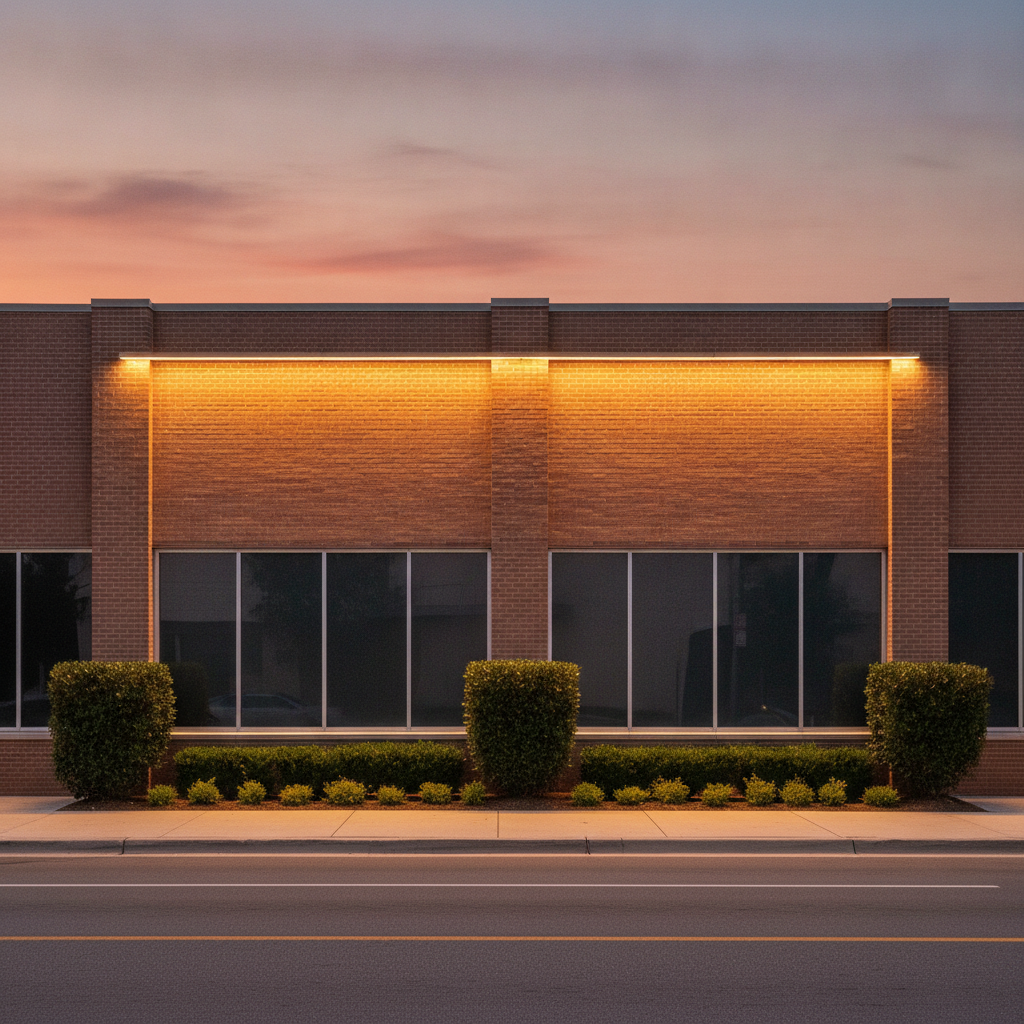
Dark walls are the most reliably tagged walls. Adding light to rear elevations, loading areas, alley-facing walls, and parking structures removes the cover vandals depend on. Motion-activated fixtures work well in low-traffic areas because the sudden change itself is a deterrent.
Sightlines and natural surveillance
Anything that lets people see a wall protects that wall. Trim overgrown vegetation that screens elevations from the street, remove solid fencing that creates hidden pockets, and keep dumpster enclosures positioned where they stay visible. Walls facing an occupied road get tagged far less than walls facing an empty lot.
Access control
Look at your building the way someone climbing it would. Downspouts, low roof edges, dumpsters parked against walls, stacked pallets, and utility boxes all function as ladders. Relocating a dumpster a few feet from a wall can eliminate access to an entire second-story elevation. Secure roof hatches and fence off service corridors that offer both concealment and a clean canvas.
Landscaping as a barrier
Planting is an underused defense. Thorny shrubs, dense hedging, and climbing vines along vulnerable elevations physically prevent someone from getting close enough to tag. Vines in particular break up the flat surface a tagger needs. It also improves the property’s appearance, which reinforces the impression of active ownership. We handle landscaping alongside our other property services, so barrier planting can be coordinated with the rest of your maintenance program.
Choose Surfaces That Resist Tagging
If you are repainting or planning a renovation, a few choices pay off for years. Textured and heavily patterned masonry is harder to write on and less rewarding than smooth stucco or flat block. Mid-tone and darker paint colors show tags less starkly than bright white walls. Whatever you choose, keep matched paint on hand so a small hit can be covered the same day rather than waiting on a color match.
Consider Murals on Chronic Walls
For walls that get hit repeatedly no matter what else you try, a commissioned mural is worth serious consideration. Artwork is generally respected within graffiti culture, and murals frequently go untouched for years on walls that previously needed monthly attention. It converts a liability into something that improves the property, though it works best with genuine community involvement rather than a purely decorative treatment.
Document Every Incident
Documentation does not prevent the first tag, but it changes everything after it:
- Photograph each incident before removal, with date and location
- File a police report even when you expect nothing to come of it
- Track which elevations are hit and how often
- Keep records for insurance and for any municipal requirements
Patterns emerge quickly. If the same rear elevation accounts for most of your incidents, that is where lighting and coatings should go rather than spreading budget evenly across the building. Local ordinances in many Colorado municipalities also place removal responsibility on the property owner within a set timeframe, so it is worth confirming what applies to your address.
This is also why we photograph and report back on every job. Property managers need documentation for their own reporting, and it is part of what we hand over rather than something you have to chase. You can see examples of the work in our before and after gallery.
Build a Standing Response Plan
Prevention holds up when it is a system rather than a reaction. A workable plan covers:
- A single point of contact who gets notified when a tag appears
- A response standard, ideally same or next day
- A vendor already under agreement so no one is sourcing quotes mid-incident
- A documentation routine that runs automatically
- An annual review of lighting, coatings, and access points
The properties that stop having a graffiti problem are almost always the ones that made removal boring and automatic instead of treating each incident as a new project.
Talk Through Your Property
Lightning Mobile Services has handled exterior property maintenance across the Denver Metro for more than 40 years, working with property managers, ownership groups, and contractors including CBRE, JLL, and Marriott brand hotels. We can walk your property, identify the elevations most at risk, and set up a removal and prevention plan that fits how the building actually gets used. We also handle pressure washing and dustless blasting when surfaces need restoration beyond spot removal. Contact us for an estimate, or read more about our team.