Phone:
  Email:
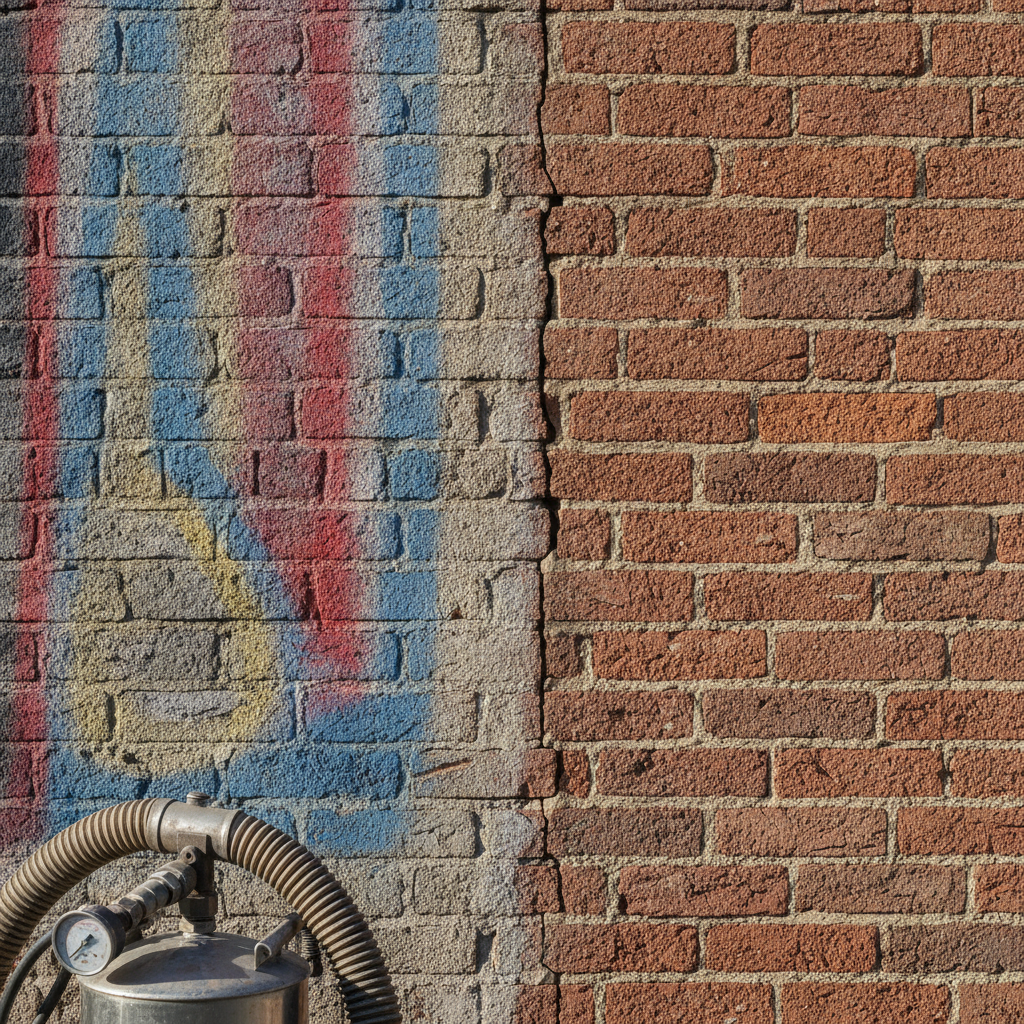
Graffiti is frustrating enough on its own, but on porous surfaces like brick, concrete, and stucco it becomes a real challenge. The paint soaks below the surface, and the wrong removal method can leave permanent shadowing or damage the material itself. The key is matching the technique to the surface. With the right approach, and ideally professional graffiti removal, you can get your walls clean without trading one problem for another. Here are the best methods for each surface, plus why speed matters more than most people realize.
Why Graffiti Is Tougher on Brick, Concrete, and Stucco
Brick, concrete, and stucco share one trait that makes graffiti stubborn: they are porous. Spray paint settles into tiny pores and rough texture instead of sitting on top, which is why a quick wipe rarely works.
Time works against you, too. City graffiti programs consistently report that removing graffiti within 24 to 48 hours leads to a near-zero rate of recurrence, partly because prompt cleanup discourages repeat tagging and partly because fresh paint has not yet worked its way deep into the surface. The City of Houston and many other municipalities build their entire graffiti strategy around that 24-to-48-hour window.
The longer paint sits, the deeper it penetrates and the harder it is to remove cleanly. That is why the right method, applied quickly, matters so much.
The Main Graffiti Removal Methods
Professionals rely on a handful of techniques, matched to the surface and the type of paint:
- Chemical graffiti removers: gels and poultices that break down paint so it can be rinsed or lifted away
- Pressure washing: hot or cold water at controlled pressure to flush paint out of masonry
- Soda blasting: a gentle abrasive that lifts paint without harming softer surfaces
- Media blasting: crushed glass, plastic beads, or similar abrasives for heavy or layered graffiti
- Paint-over or re-coating: color-matched coatings for cases where removal would damage the surface
The art is in choosing the right combination. Here is how that plays out on each surface.
How to Remove Graffiti From Brick
Brick is porous and sits alongside soft mortar joints, which makes graffiti removal on brick a careful job. The goal is to lift the paint without eroding the mortar or etching the brick face.
- Start with a masonry-safe chemical remover or poultice, which draws paint out of the pores
- Follow with hot-water pressure washing at low to moderate pressure, since high pressure damages mortar and leaves brick looking pitted
- Use soda blasting for stubborn or layered paint, as it is gentle enough for historic and decorative brick
- Avoid aggressive, high-pressure blasting, which can leave permanent scarring and ghosting
Brick is one of the most common surfaces we treat, and rushing it with too much pressure is the mistake we see most often.
How to Remove Graffiti From Concrete
Concrete is tougher than brick, but it is still porous, so graffiti removal on concrete usually takes more than a rinse. The upside is that concrete tolerates more aggressive methods.
- Apply a concrete-safe graffiti remover to break down the paint first
- Use hot-water pressure washing, which concrete can handle at higher pressure than brick
- Step up to media blasting for large areas, deep stains, or repeated tagging
- Seal the surface afterward to reduce porosity and make the next cleanup easier
Shadowing can linger on older or heavily stained concrete, which is where professional-grade removers and blasting make the difference between faint and fully gone.
How to Remove Graffiti From Stucco
Stucco is the most delicate of the three. It is soft, textured, and highly porous, so graffiti removal on stucco calls for the gentlest possible approach. Aggressive pressure or blasting will gouge the texture and leave a patch that stands out as much as the graffiti did.
- Begin with a gentle, stucco-safe chemical remover and a soft brush
- Use low-pressure or soft washing rather than high-pressure equipment
- Apply careful, light soda blasting only when a pro confirms the texture can take it
- Be ready to re-coat or repaint with a color match, since full removal is not always possible on stucco
Because stucco damages so easily, it is the surface where professional experience pays off most. Matching texture and color afterward is its own skill.
Why DIY Graffiti Removal Often Backfires
Store-bought removers and a rented pressure washer can work on a small, fresh tag. On larger jobs or porous surfaces, do-it-yourself attempts often cause more harm than the graffiti:
- The wrong chemical can stain or discolor brick, concrete, or stucco
- Too much pressure erodes mortar, etches surfaces, and leaves ghosting
- Incomplete removal leaves a shadow that is harder to fix later
- Wash water carrying paint and solvents can violate local stormwater rules
Professionals match the method to the surface, protect the surrounding area, and handle wastewater responsibly, so you end up with a clean wall and no new problems.
How to Prevent Future Graffiti
Once a surface is clean, a few steps make the next tag less likely and easier to handle:
- Apply an anti-graffiti coating, which lets future paint wash off without penetrating
- Remove new graffiti quickly, ideally within that 24-to-48-hour window
- Improve lighting and sightlines around frequently tagged walls
- Document and report tagging to help local authorities track patterns
For walls that get hit repeatedly, a sacrificial or permanent coating is one of the smartest investments you can make.
Professional Graffiti Removal in Denver
Removing graffiti from brick, concrete, and stucco comes down to using the right method for each surface and acting fast. Done well, your walls look untouched. Done wrong, the repair can cost more than the original cleanup.
Lightning Mobile Services has removed graffiti for Denver-area property managers, municipalities, and businesses for more than 40 years, often for other contractors who call us when they cannot solve it themselves. We match the technique to your surface, protect what is around it, and document the work when we are done. Reach out for a free estimate, or explore our exterior property maintenance services to keep your property looking its best.